
Siit saab lugeda eestikeelset versiooni artiklist, mis ilmus ajalehes Sirp 9. juunil.
For this article I asked five presenters of the conference Animal Advocacy Against the Grain? four questions. 1. Biggest accomplishment/impediment of global AR movement. 2. Same regionally 3. Best strategies/tactics during the time of AI, fake news etc 3. Do you have an utopia?
Warning! These answers are neither shortened nor edited and very interesting!
Ronnie Lee is probably best known for being one of the founders of the Animal Liberation Front (ALF) and for having spent about 9 years in prison for ALF activities. In more recent years though, he has turned his attention to vegan outreach and frequently speaks of the importance of vegan education, and of local vegan activist groups, for the achievement of animal liberation.

I feel that to achieve animal liberation, we need widespread vegan education. An interesting development, at least here in the UK, in relation to this is the increasing use of direct action to raise public awareness about the plight of other animals. There’s a group here called Animal Rising who have carried out various actions in that category, including very recently an occupation of a dairy farm and the rescue of a three young lambs from a farm belonging to the royal family. However, in my view, the actions of this group do come with an impediment because in their media statements they say nothing about the importance of people as individuals becoming vegan. They seem to regard veganism as a scare word and I think that’s really a great shame, because if they were to encourage people to become vegan in their publicity materials, I think it would have a really good effect in increasing the amount of veganism.
Regionally, I think what is important is that as many vegans as possible become involved in spreading the vegan message in their own areas. What worries me is that there are nowhere near enough vegans doing this and it seems really very difficult to persuade many to do so even if they are asked to carry out the most simple actions such as just distributing leaflets. The situation, however, is still better than it was some years ago when the amount of vegan outreach was very much smaller than it is today.
With regard to fake news etc., I think what we need to do is to make much more effort to spread our own information, whether that be in the form of leaflets or posts on social media or other forms of spreading the vegan message to the public. What’s not so good is is when vegans think their message is reaching the public when that isn’t really the case and that can often happen on social media when most of a person’s friends or followers are also vegan, so the message doesn’t get out of the vegan bubble, so to speak. We need to make sure that we spread information in a way that it does reach a substantial number of non-vegans.
My utopia for other animals would be one where they’re no longer oppressed or exploited by humans, and that demands huge changes in the way humans operate on this planet. It means that we all have to adopt a vegan diet, so animals are no longer farmed or caught for food, but we need to go much further than that in order to end all forms of human oppression of other animals. We have to put an end to things like hunting, animal experimentation, zoos, animal racing and circuses that use animals for instance. It also means we have to tread much more lightly upon the Earth in terms of the impacts we make on the natural habitats of other animals. We have to reduce our impact all across the board, including reducing human population, and changing our transportation system, (because a huge number of animals are killed on our roads by motor vehicles and birds are killed in the sky by aircraft). Also mechanised harvesting of crops results in a large number of animals who live in those fields losing their lives, so we need to look at doing the farming in a different way, perhaps in a much more manually. We need to reduce our pollution of the natural environment and to to stop burning fossil fuels because of the huge contribution of that to the climate crisis, which is already causing the deaths of billions of other animals. This really means that we have to consume far less and to “live simply, so that others may simply live”, as Gandhi said.
Vivek Mukherjee has been Assistant Professor of Law at NALSAR since 2017, and also coordinates their Animal Law Center. Previously, he was teaching at the University of Petroleum and Energy Studies. His interests include Animal Law, International Law, and Environmental Law. Current research projects: Legal Personhood of Elephants in India with Nonhuman Rights Project, USA; Illegal Wildlife Trade and Zoonotic Diseases with Harvard Animal Law and Policy Program; three funded research projects on Farm Animal Protection with Humane Society United States; book project with Prof. Faizan Mustafa on Decisional Privacy and Freedom of Religion in India (Penguin Random House India).
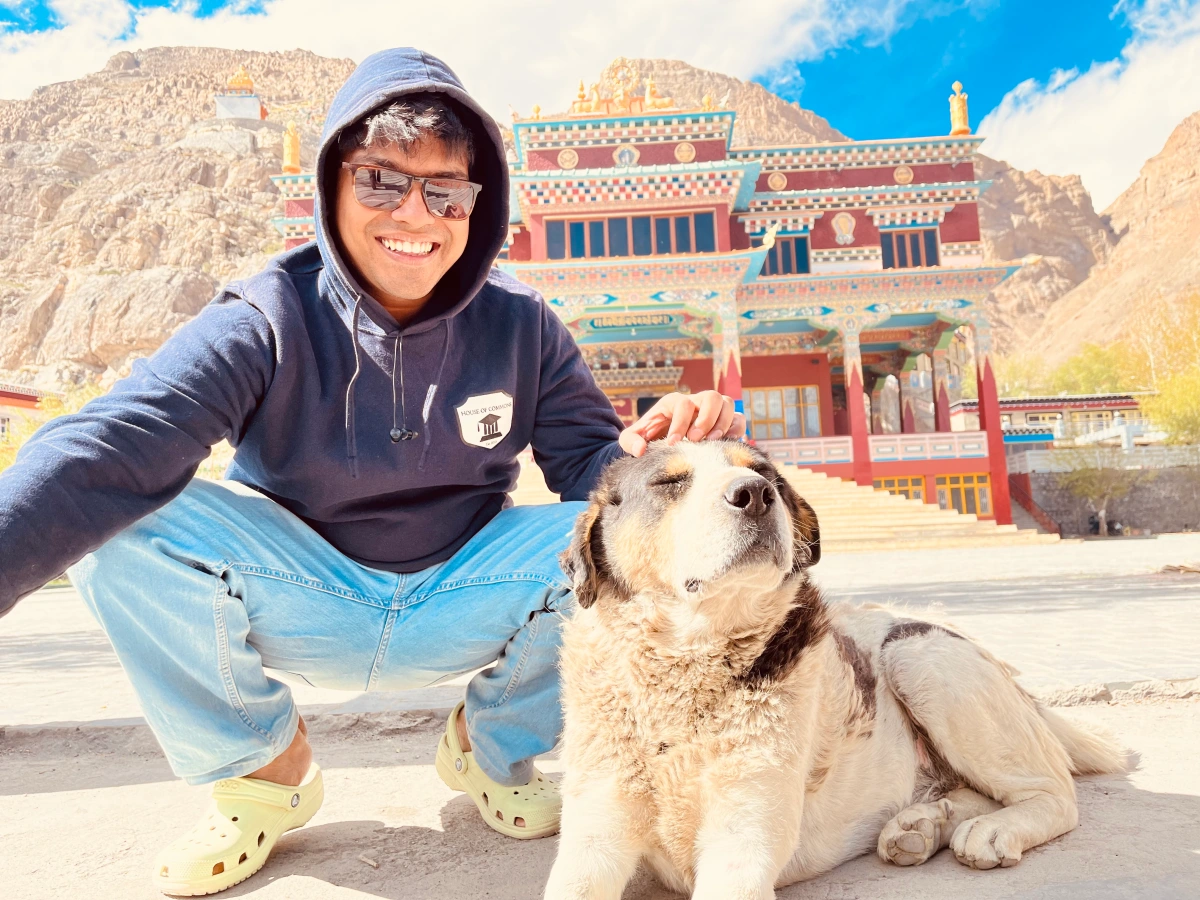
The biggest accomplishment has to be the idea of welfarism for protection of
animals. Ironically, it is also one of the biggest impediments (but not the
biggest). Let me explain! Animal Welfarism based on a foundation of
utilitarianism penetrated the general consciousness of humanity and in turn
became one of the components of law and governance sometime in the late 60’s
and early 70’s. Prior to that, animal cruelty was a matter of concern to humans
only when cruelty was witnessed in the public sphere. The biggest contribution
of welfarism to the animal liberation movement, I believe, is that it made
animals subject to the human gaze. It was for the post-modern scholars to
subvert the unidirectional gaze and take theory in a direction in which the
subject’s objectification was questioned. Derrida’s “The Animal That Therefore
I Am” published in mid 2000s started a discourse in that direction but by then it
was too late. Welfarism had and still does hegemonize the discourse on the
animal question, mainly because it could penetrate the law’s domain. Strangely,
cruel treatment of animals reported in media does invoke emotional responses
and initiates a discourse in the civil society, but this energy almost never
translates into legal action. Law and governance are always latecomers and for
good reason. It waits for the most rational and practical theory to trump over
other theories that may not be the most rational but may be the most just out of
the many competing theories and that is exactly what we witnessed in the 60s
and 70s. Welfarism, I believe was a well thought out, deliberate project to
maintain the artificial superiority of humans over animals. The animal was never a central figure for philosophers, and it is because of such neglect that the vacuum of theory was filled by almost direct action, without much thinking backing such action. As to why animals were neglected is a story for another day. This is what distinguishes animal liberation movements from other new social movements. Practice precedes theory. Most philosophers and thinkers who are now writing about animals are doing so in a hyper-real context where each nation has a string of laws, rules and bye-laws, all based on the unwholesome basis of welfarism in which human wants (and not needs) trump animal interest (including their life). Most thinkers are trying to fine-tune their theory to the existing reality, understanding very well that anything that goes against the basic tenets of welfarism will be discarded as too radical to be practical. It is due to this reason that there is an unfettered attention on concepts like “personhood” and a privileging of intelligent animals in theoretical literature whereas most practical accomplishments are made in the farmed animal space, documented by Animal Welfare Organizations mostly in the form of reports. This creates a huge theory-practice divide. I do not believe that the legal thinghood of animals (as contrasted to personhood) is the biggest impediment that we face in the movement today. It is rather the deep rooted cultural and social fear of the animal and the artificial construction of human superiority over animals which is the root cause of all problems. Simply put, we must find a way to meaningfully answer the most common question that people who do not believe in the concern raised by people in the movement are making: How can one think of justice for animals when humans are suffering injustice at such a large scale? Lack of political identity of animals since they cannot vote in a largely democratic system is another riddle that political scientists must solve.
I must answer these questions about progress/accomplishment made in the
movement or biggest impediment in India in light of the larger limitations of the
movement highlighted in my response to the first question.
The pathetic condition of stray animals, particularly of dogs worries me the
most, especially during and after the pandemic. Let me try and problematize
this. I believe that there is a collective creation of the ‘other’ embodied in the
figure of dogs, both stray and abandoned, that emerged during the pandemic in
India. How the ‘other’ generated out of the fear of the invisible (virus) is
defined by anthropocentric insecurities identifying a vent in the demonization of
non-human entities. Humanism was used to satisfy the collective conscience of
the humans through preservation of the culturally constructed urban spaces.
However, the process of othering was selective. It relaxed the exotic population
that served as decorative companions to humans, nearly a duplication of human
class distinction. The othering that emerged through a nexus between
speciesism and classism can be studied through the assessment of compassion
and morality as remedial to the crisis discussed. India’s position as a developing
country for its overdue evasion of the responsibility that the state owns towards
its non-human minorities is matter of concern and must be brought to the fore
by all stakeholders.
To answer the second part of the question: Wildlife native to India is best
regulated under Indian laws (the Wild Life Protection Act, 1972). The
enforcement of these laws is much better compared to laws purporting to
regulate livestock or pet shops.
Post-truth or not, litigating animals too frequently is never the best strategy. As I
have mentioned in my response to the first question, artificial construction of
human superiority over animals which is the root cause of all problems and
therefore, the changes need to come from within the society and not from the
judiciary which is not the most democratic of all institutions anyway. This may
sound utopian, but we must patiently work towards such social change.
An attempt to drive the point home may be made by reiterating the point that I
am making in the Loomus conference: Indian courts have become a site of a
constant tussle between human tradition and other-than-human ‘rights’ since the
Supreme Court of India decided the Jallikattu matter in 2014. In the celebrated
judgment of AWBI v. Nagaraja, which ostensibly recognized the fundamental
right to life of bulls who were cruelly forced to participate in the racing sport of
Jallikattu, the Supreme Court prohibited the cultural activity of bull racing,
reading a directive principle of state policy that prescribes the state to protect
and improve the environment and safeguard the forests and wildlife of the
country as the magna carta of animal rights in the country. Reacting to the
unfavourable judgment which bans the cultural activity of Jallikattu, the state of
Tamil Nadu decided to amend the Prevention of Cruelty to Animals Act, 1960
(PCA) in the state with the effect of lifting the ban in favour of ‘regulating’ the
cultural practice. This was done by the State of Tamil Nadu by going against the
opinion of the Animal Welfare Board of India and the Central Ministry of
Environment, Forest and Climate Change, raising significant federalism
questions. The dispute has reached the Supreme Court of India again, and the
court is required to decide on the validity of the amendment of PCA by the
Tamil Nadu government. I argue that (a) without the recognition of
constitutional right of animals through an amendment in the Indian constitution,
it is unfair to pitch a strong fundamental constitutional human right to culture
against a weak right enjoyed by animals recognized by the court using tools of
interpretation; and (b) activists must resist approaching courts for disputes
involving a conflict between human and other-than-human subjects as it leads to
unnecessary magnification of a cultural practice that was originally practised in
a small district of Tamil Nadu.
Getting rid of the “sameness” argument is my utopia for animals. The idea that
animals that are more intelligent than other animals and thus, closer to humans
deserve better protection leads to the reinforcement of the anthropocentric basis
of all theory ever made. A specie-based conception of rights for animals is the
dream, where one-size fits all animal rights is challenged. In fact, it is due to the
one-size fits all conception of animal rights that it has become such an ordeal
for courts and parliamentarians to be convinced of such rights. My point is
simple, whatever freedoms/protections are provided to animals already under
welfare laws should be recognized as specie specific fundamental constitutional
animal rights. The most significant difference this will make is that animals will
be subject to the utilitarian calculus of humans.
Brett Mills is a member of the Centre for Human-Animal Studies at Edge Hill University, UK, and an Honorary Professor of Media and Cultural Studies at the University of East Anglia, UK. His most recent book is Animals on Television: The Cultural Making of the Non-Human (Palgrave, 2017). He belongs to the AHRC-funded project teams Multispecies Storytelling: More-Than-Human Narratives About Landscape (2019-22) and Multisensory Multispecies Storytelling to Engage Disadvantaged Groups in Changing Landscapes (2020-22), and as part of the CULIVIAN research group at the University of Valencia, Spain, to the research project Representations of Masculinities in Animal Advocacy Documentaries in English (2000-2021).

The most astonishing accomplishment over the last decade or so has been the normalisation of veganism. That is not to say there isn’t still a long way to go – but in many European countries it is now seen as quite a normal ‘lifestyle’ and it is easier to find vegan food in shops and restaurants. This, I think, was unimaginable about a decade ago. I think this has been caused largely by Veganuary, but also by younger generations who have differing relationships with animals, ethics and the environment.
The biggest impediment remains the animal meat industry, and – by extension – global forms of capitalism that understand animals as resources. The meat industry has lots of economic and political power, and it remains hard for many people to imagine a world without it. Yet it is responsible for billions of deaths a year, and clearly informs how humans understand and think about animals.
The biggest worry – from a UK perspective – is Brexit. It is hard to know where the UK will head in order to mitigate the disaster of brexit, and to try and make it look like a success. It will undoubtedly affect farming practices, workers’ protections, and environmental regulations. But it also makes global solutions harder, and invites British people to understand their actions at a national level alone.
That said, the Animal Welfare (Sentience) Act passed in the UK in 2022 is a major leap forward in protections for animal sentience. It’s unclear what its consequences will be, but it is a milestone that has to be heralded.
I work in media studies, and so concerns about post-truth, fake news worlds is key, given so many people develop their understanding of the world via media. More important than ever is media literacy – helping people develop the tools to make sense of the information around them, and the platforms by which they receive it. Images remain powerful – many people talk about their views on animals changing because of photos or films about animals they have seen. We have to keep making these, to counter the imagery distributed by people and organisations with no interest in animal justice.
Preaching, moralising, holier-than-thou attitudes, are all bad tactics. The best way to encourage people to go vegan, for example, is by just being vegan yourself, and showing to others how simple and straightforward it is. People don’t like being told they’re wrong: but they do like making moral decisions, and an easy life.
Utopia? I have no idea! This is a thing I’m still struggling with (and I think that’s a good thing – I’d worry if anyone had got their utopia fully defined). It seems that animals will only have justice when humans reduce their impacts upon them – but I’m not sure how this is achievable, and I worry about some of the problematic extrapolations that can be made from such a stance. Perhaps the key thing for me would be that humans understand animals as individuals, rather than as species, or members of packs, groups or herds. Engaging with an individual is very different to engaging with a group – and makes you rethink your approach, your ethics, and your power.
Martina Davidson (they/them) has a Master’s degree from Fluminense Federal University (UFF) in Brazil and is currently studying as a Ph.D. student of Bioethics, Applied Ethics and Collective Health at the Federal University of Rio de Janeiro (UFRJ) in Brazil. They also teach at the Nucleus of Bioethics and Applied Ethics at UFRJ. Martina Davidson is a researcher and expert in topics such as decoloniality, gender and sexuality, animality, veganism, transfeminism and anti-capitalism.

I find it difficult to answer with a closed list of points about animalist
transformation in current societies. However, I believe that decoloniality
as a critical axis in relation to speciesism-whiteness and the ontological
binarisms imposed through colonization and maintained through
coloniality, conform as an essential gyre with regard to envisioning new
answers (or perhaps, most importantly, new questions) regarding animals.
In this way, the conditioning and limitation of colonial thought is one of
the greatest impediments to envisioning anti-speciesist systemic
alternatives (also, at the same time, anti-racist, transfeminist,
anti-capitalist, among others) that are already put into practice when we
think geolocally. Thus, direct actions, grassroots work and
theoretical-practical productions committed to overcoming colonialism
make it possible to think, globally, of new forms of animalist alliances
and experiences of anti-speciesist social transformation that are, as a
result of decoloniality, intersectional. In this way, we have animalist
movements committed to a decolonial justice, which asks for activists
that combat all types of oppression, precisely because they understand
that there is a tangle of violences that must not be fought separately- as
they were in the past and still are, by some large organizations.
If I think specifically about Latin America, we are perhaps faced with a
few more problems. When there is hunger, when a young black man is
murdered by the police every 23 minutes, when femicides and
transvesticides are frequent in the media, animalisms should assume an
action strategy capable of understanding the complexity and urgency that
affect the lives of many people. subaltern people. That is, who knows, the
urgency for anti-speciesist articulations committed to anti-racism, the
fight against LGBTIphobia, sexism, etc., is essential so that animalist
concerns do not sound like a reissue of historical social oppressions. Or,
even, as a struggle that fits too well into capitalist production that adds
market value to products marked as “vegan-friendly” or similar seals, thus
tracing a class (and therefore, race) distance. In addition, another major
problem concerns the importation of actions from other parts of the world
without adapting them to another reality: the strength and centrality of the
agroindustry; in the case of Brazil, including the presence of a mafia
group in Congress that calls itself the “Bancada do Boi, Bala e Bible”; the
murder of activists in favor of the environment, native peoples and
anti-agribusiness. These characteristics imply a harsh reality, in which
actions carried out in Europe do not have the same effect on this continent
and can even lead to death. I must point out, however, that there are anti-speciesist movements that have already integrated a decolonial and sullen commitment into their political strategies. These changes, such as the emergence of an Afro-Vegan Movement, the Vegan Activism Union and anti-capitalist
animalist collectives, symbolize the possibility of new articulations that
are not only focused on combating speciesism, but that understand the
need to go against the entire system. generator of speciesist, racist,
classist, anti-ableist societies, etc.
I believe, based on an anarchist perspective, that direct action, grassroots
work and an integrated anti-oppression approach are essential and
geolocalized strategies for facing fake news or other issues raised in the
question above. In this way, I leave you with a reflection about the ALF
and how I believe that this is a form of liberation, also, in the face of this
cyber-speciesist society. Something about the existence of actions or
groups that seek to allocate resources in order to move towards a fairer
world – and to rebel against all institutionalized violence – is too
threatening for Capitalism. It is a struggle that seeks to fight not only one
of the symptoms of an oppressive society, but also to fight racism,
speciesism, machismo, sexism, LGBTIodium and queer-hate, fatphobia,
environmental destruction, war on drugs, coloniality , militarism, ableism
and a long and broad etc. It is in this sense that the Animal Liberation
Front (or ALF) articulates itself through anarchic cells, without leaders or
list of members, based on what we call direct action. In this way, the ALF
is articulated as a model of horizontal struggle (without leaders), in which
different cells of the group operate clandestinely and independently of
one another through direct actions. But what is direct action anyway?
“Direct action” is, in essence, taking direct and radical action, that is,
concretely addressing the issue behind political concerns and aspirations.
The term is used to describe a wide range of activities designed to raise
awareness and address a specific problem without requiring the
cooperation or authorization of any authority. This is the case, for
example, of the famous action to free beagle dogs from the Royal
Institute. Dozens of activists knocked down a gate and invaded, around 2
am on an August morning, in 2013, the laboratory of the Royal Institute,
in São Roque, 59 km from São Paulo. The activists took dozens of
animals that were in the complex in their own cars, motivated by the fact
that the animals suffered mistreatment, were instrumentalized and
exploited in the place. But why defend or seek to know more about direct action? This type of action differs from symbolic protest action, appropriating tools for
liberation, ransoms, sabotage, destruction of private property and other
actions of protest and boycott of oppressive practices. In the case of the
ALF it is important to note that any direct action that promotes animal
liberation and that takes all reasonable precautions not to endanger the
lives of animals (human or otherwise) can be claimed as taken by the
ALF, as long as it is consistent with the objectives of the organization.
From direct action to direct action, the ALF is therefore committed to
combating speciesism and the systemic origins of oppressive practices. In
a certain sense, the ALF is articulated within an Ethics of Sabotage, a
practical ethics of preventing and liberating from situations of
vulnerability and combating exploitative agents.
Together with researcher and Phd Anahí Gabriela González, I have been
articulating an animalist utopia based on the concept of wild alliances. I
leave, below, a brief explanation about this thought of ours. That is, based
on an animal philosophy (not an animalist philosophy) and animal
affective politics, in the form of wild alliances, we would be able to
contemplate better worlds for all of us. In this sense, tracing animality as
a meeting point and resistance is a joint political bet capable of
conforming insurgent and just societies.
Heldi Marleen Lang is a board member of the Estonian Vegan Society while also pursuing an undergraduate degree in philosophy at the University of Tartu in Estonia. She is most interested in the philosophy of medicine and bioethics. Currently, her academic pursuits centre around the ethics of animal testing within the field of biomedicine. In her previous studies, Heldi Marleen Lang has also delved into Estonian literary works, in particular in the framework of ecocriticism.

It is important to understand that climate crisis and animal rights are closely related. Factory farming is one of the biggest destroyers of natural balance. If animal rights are not dealt with, then in fact climate crisis is not dealt with concern. Mankind needs to change its customs and values to combat climate crisis, and attitude toward animals is part of it. Luckily this message has started to intertwine in corresponding movement. In philosophy there has always been place for animals, but views on this have changed. The ideas of animal rights’ philosophers are important and stand in majority regardless of the time they have been published. Still the contemporary thinkers and thinkers of recent history seem most important to me: Peter Singer, Martha Nussbaum, Tom Regan, Evelyn Pluhar and others. Everybody should get acquainted with their arguments in defence of animals – these are philosophers who show that taking animals into account does not mean ignoring human interests, because people can live a decent life without using animals.
Although the same is probably true for other places, in Estonia I am disturbed by the attitude of people and those in power, who state that “there are more important topics than animals”. If the state would take steps to protect those creatures that cannot protect themselves, then it would probably be easier to guarantee the quality of life for people, as the message would be clear: “we do not tolerate suffering”. In case of Estonia, one always needs to consider the fact how small the state is, which of course does not minimize the importance of local problems and actions but increases the importance of collaborating with other countries. A great aspect is the fact that we are good at collaborating with the other Baltic as well as Nordic countries, and in addition Europe as a whole is also important of course. Last years have shown the power of collaboration and the fact that doing as bigger states do is not bad if their methods have proven success. In the course of following years, the changes in consumers choices should reach to changes in government decisions. Finland seems to be the steering locomotive in this respect, applaud to its local activists!
My view is that one should not be afraid of artificial intelligence, but it should master to use it to a certain point to bring benefit to oneself (and animals). Artificial intelligence knows human behaviour as well as attitudes and probably it can present people the idea of for example finishing the torture of animals better than a person who is educated (but still emotional) on animal rights. Having been in animal rights area for some time already, I feel that often it is even difficult to find a common ground for discussing about animal rights with a person who is not familiar with the topic.
The other half of the issue is fake news. These often draw attention by startling titles and disturbing visuals. This is how people who avoid in going deeper to animal rights topics see them, because they do not want to change their habits. One would need to keep in mind that materials showing animal sufferings would not be perceived as false news. At the same time the courage of revealing the truth should not be lost. The post-truth era may sound scary, but the sufferings of animals are horrible in all eras.
Animal rights tend to be understood incorrectly. Good life for animals is much simpler than for humans for example. Animals do not need ideal ruling of the state, golden trays, or most up-to-date technology, as the understanding of utopia usually foresees. They simply need humans to stop exploiting them. For animals, no suffering, suitable place of living and food are important. If humans would let animals to live their natural life without causing them suffering or egoistically interfering in their lives or places of living, then this would be the right thing. But I think that this kind of life would also be good for humans, because it is simple to live without consuming animal products, and to eat accordingly. I cannot speak up for everybody, but at least it seems to me that this would bring internal peace, to know that animals do not suffer because of humans. I do not know if this can be called utopia, but for animals the current world is like dystopia, where their fate is as if decided before they are born.
 more-than-human
You must be logged in to post a comment.